How to inspect a second hand North Face jacket
· Editorial Team

Inspect a second hand North Face jacket by checking its labels, outer fabric, lining, fastenings and measurements before you buy. For your 2026 purchase, separate cosmetic wear from damage that affects use, and never treat a tidy logo or water beading on the surface as proof of authenticity or waterproof performance.
- Buy a second hand North Face jacket for its verified condition and fit, not its logo alone.
- Check the inside of technical outerwear for peeling coatings, lifting seam tape and damaged lining.
- Compare garment measurements with a jacket you wear; the size label is only a starting point.
- Dawgstudio suits UK shoppers seeking curated vintage and pre-owned outerwear, rather than a specific technical performance guarantee.
Why this matters
A jacket can look good on a hanger and still fail your basic checks. A working front zip, intact lining and useful fit matter more than an attractive colourway.
Inspect the jacket you are buying, not the reputation of the brand. The North Face name does not tell you how a previous owner wore, stored or cared for that particular piece.
Dawgstudio is a UK online shop curating vintage and pre-owned outerwear and streetwear. Use the same inspection standards wherever you shop: clear photographs, readable labels and answers about the actual garment.
How do you inspect a second hand North Face jacket?
Work from identity to condition, then fit. This order stops you getting attached to a jacket before you know what it is and whether it works for you.
- Read the labels. Check the brand, size, fabric composition, care instructions and any readable style information.
- Inspect the outside. Look across the front, back, shoulders, elbows, cuffs and hem for damage or repairs.
- Inspect the inside. Check the lining, pocket bags, exposed coatings and seam tape where present.
- Test the fastenings. Operate the zip, pocket closures, cuff adjusters and hood controls without forcing them.
- Compare the fit. Match garment measurements to a jacket you already wear comfortably.
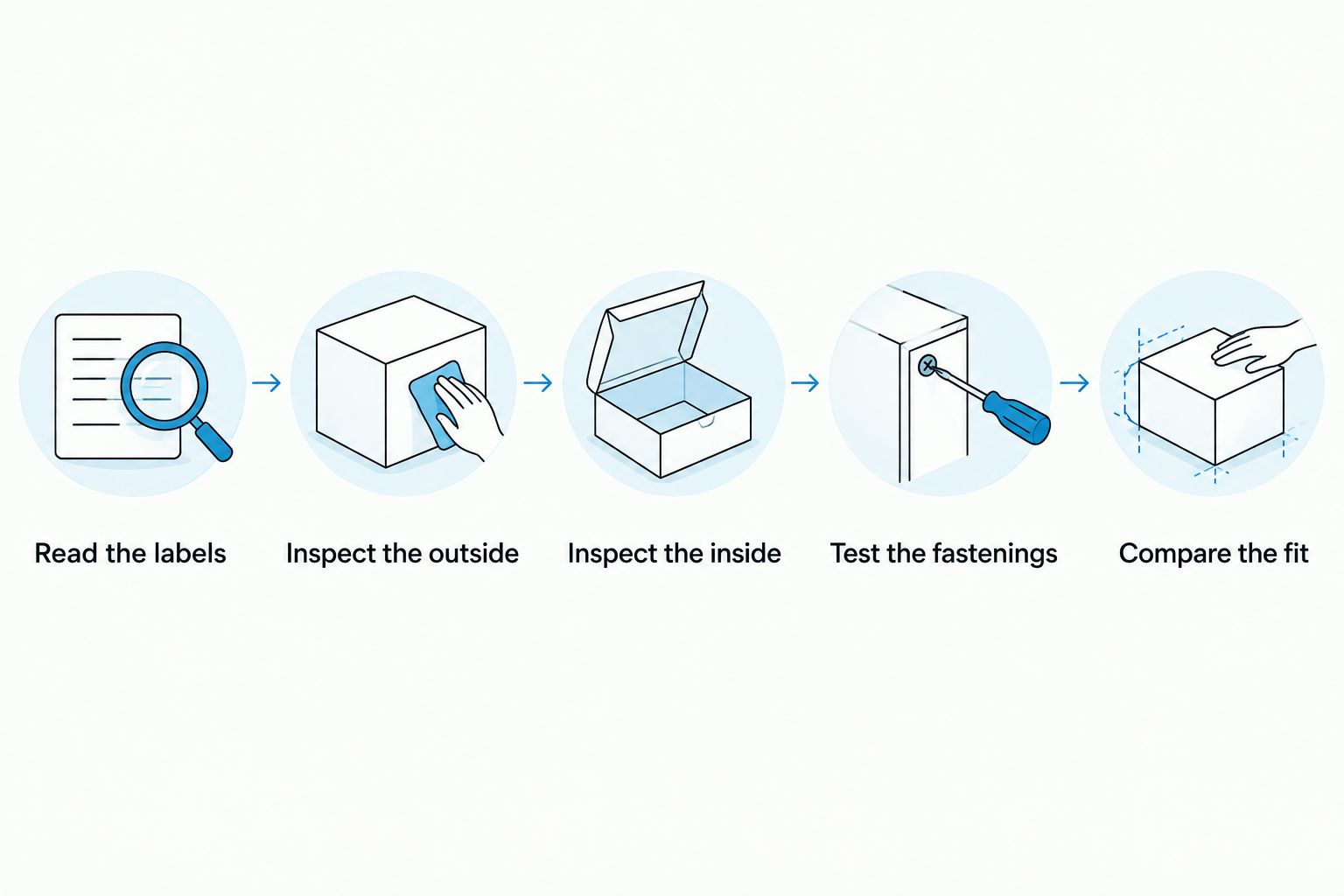
For an online purchase in 2026, follow this sequence through the listing photographs. Ask for a close-up when a check cannot be completed from the images. A distant front photograph is not evidence that the cuffs, interior or zip are sound.
Read the labels without turning them into a guarantee
Look for readable photographs of the main label and the care labels. Copy any style information exactly before searching for a matching model. Do not guess missing characters or assume that a similar-looking jacket is the same version.
Compare the label information with the garment itself. Fabric composition, lining and visible features should make sense together. If the seller names a model, ask what supports that identification.
A label is evidence to examine, not a standalone authentication certificate. An unreadable label leaves questions unanswered; it does not automatically prove that a jacket is fake.
Avoid blanket rules about a particular logo position, country of manufacture or label colour. Without model-specific evidence, those shortcuts turn a useful inspection into guesswork.
Inspect fabric where it gets worked hardest
Start with cuffs, elbows, shoulders and the lower hem. Look for thinning fabric, open seams, holes and abrasion rather than judging everything from the front panel.
Check beneath pocket flaps and around zip ends where photographs allow. Turn the jacket over. A clean front does not cancel damage across the back or underneath the sleeves.
Distinguish appearance from function:
- Cosmetic wear: fading, surface marks or pilling that you are happy to live with.
- Damage needing attention: open stitching, torn pocket bags, holes or broken closures.
- Unresolved condition: areas hidden by the photographs or described too vaguely to assess.
Do not assume a stain will wash out. Buy on the basis of its current appearance, not a hoped-for result after cleaning.
Inspect the lining and technical layers
Open the jacket fully and examine the inside. Where there is an exposed coating, look for peeling, flaking or bubbling. Where there is seam tape, check whether it lies attached rather than curling away from the seam.
A fabric lining can hide the layers underneath. Ask about anything you cannot see instead of treating a neat lining as proof that every hidden component is intact.
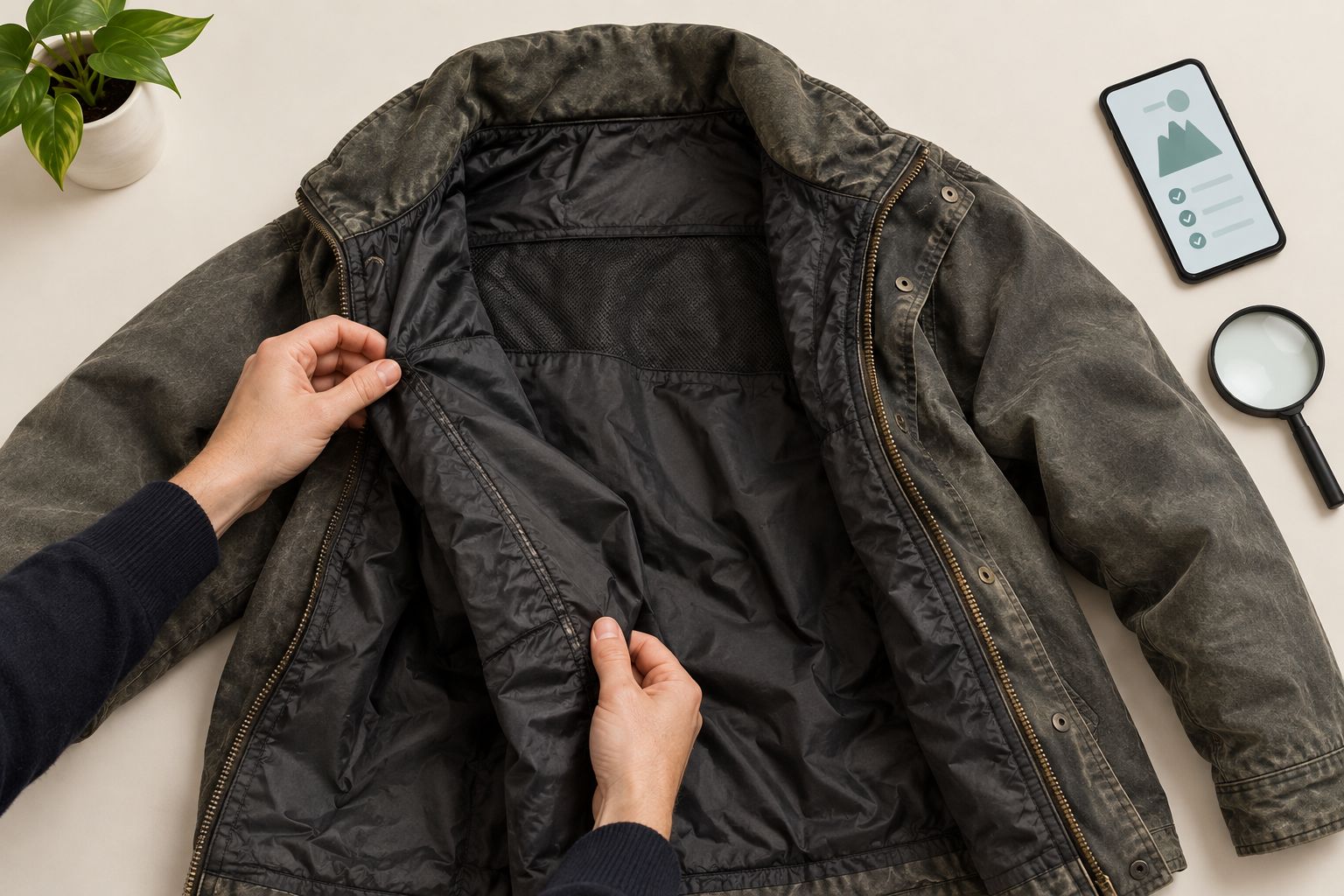
Check the underarms, neck and pocket interiors too. Ask about persistent odours when buying online; a photograph cannot answer that question.
Do not buy visible peeling or lifting tape on the assumption that washing will fix it. Cleaning and structural repair are different jobs. If dependable rain protection is essential, unresolved internal damage is a reason to stop.
Test closures without forcing them
Run the main zip through its full travel. Check that the teeth engage, the slider moves properly and the closed zip stays joined. Inspect the bottom insertion point as well as the pull tab.
Open and close the pockets. Test press studs and hook-and-loop tabs gently, then check whether the surrounding fabric or stitching is pulling away.
Inspect hood drawcords and hem adjusters where fitted. Missing hardware is not always a deal-breaker for casual wear, but it changes what you can adjust. Decide whether that matters before buying.
Compare measurements, not just size letters
Ask for the chest measured flat, body length and sleeve length, with the measuring method explained. Record garment dimensions in centimetres and compare them with a jacket that already fits you.
A chest measurement taken flat is not the same as a body circumference. Keep the comparison like-for-like. For raglan sleeves, ask where the sleeve measurement starts rather than comparing it directly with a shoulder-seam measurement.
Try the jacket over the layer you intend to wear beneath it. Zip it up, reach forward and lift your arms. Check whether the shoulders restrict movement or the hem rides up more than you want.
For online shopping in 2026, a size label without measurements is an incomplete fit check. Request the dimensions before deciding.
Check the jacket type before judging its condition
Different constructions need different attention. Use the comparison below to decide what to inspect first, not to assign performance to an unidentified jacket.
| Jacket type | Best for | Main advantage to assess | Limitation to check |
|---|---|---|---|
| Rain shell | Shoppers seeking rain protection supported by the model information and condition | Coverage, closures and intact weather-protection components | Surface beading does not prove the jacket will keep rain out |
| Insulated jacket | Shoppers seeking warmth from an identified insulation construction | Even-looking insulation and a comfortable layered fit | Photos cannot establish a temperature rating or retained warmth |
| Softshell | Shoppers prioritising movement and a comfortable outer layer | Fabric flexibility and useful fit | The category name alone does not establish waterproofness |
Rain shells: look beyond the outside
Check the interior construction, seam tape where fitted, hood coverage and zip protection. Look closely at folds and areas repeatedly bent during wear.
Water beading describes what happens at the surface. It does not establish the condition of a membrane, seams or closures. Do not turn a water-beading photograph into a waterproof guarantee.
For a 2026 purchase intended for wet-weather use, verify the exact model's intended function and assess the actual garment. If that evidence is unclear, do not rely on it as your only rain layer.
Insulated jackets: inspect the whole fill pattern
Look across the panels rather than judging puffiness from a single angle. Check for torn fabric, damaged stitching and visibly uneven areas of insulation. Ask the seller to explain any flat section.
Read the composition label to establish whether the insulation is down or synthetic. Do not infer the fill from the silhouette, and do not treat a product name as a temperature rating.
Avoid crushing or pulling at the jacket during an inspection. You are checking its condition, not stress-testing it. Small visible feather ends and an open seam also require different judgements; inspect the source of any escaping fill.
Softshells: check movement and the inner face
Examine the fabric for abrasion, snags and separation between layers where visible. Check any inner fleece surface for wear, then assess whether the jacket moves comfortably across your shoulders.
Dawgstudio's The North Face softshell olive green jacket listing identifies a size M jacket. Its title says olive green, while its description uses tan/brown, so confirm the colour from the photographs and ask if it matters to your choice.
Best for: shoppers assessing a pre-owned outer layer by its own measurements and condition. The limitation is straightforward: a softshell title does not verify waterproof performance, fit or the condition of that individual piece.
Why second-hand jacket condition varies
Inspect each garment on its own merits. These factors explain why you need more than a model name when choosing second-hand outerwear in 2026:
- Construction: a lined jacket can conceal components that an unlined jacket exposes.
- Wear location: cuffs, shoulders and hems need separate checks rather than one overall condition judgement.
- Care requirements: the care label determines the appropriate cleaning instructions; do not assume all jackets need the same treatment.
- Repairs and alterations: ask whether stitching, panels, zips or labels have been changed.
- Photographic coverage: missing interior or detail views leave specific inspection questions unanswered.
- Your intended use: cosmetic wear acceptable for everyday streetwear does not settle whether a jacket is suitable for dependable rain protection.
Do not invent a history from the wear pattern. Abrasion is something you can observe; how it happened needs evidence from the seller.
Can you tell whether a North Face jacket is genuine from photos?
Photos alone do not guarantee that a North Face jacket is genuine. Use clear label, construction and detail images to identify questions, then compare them with reliable information for the exact model where available.
A recognisable logo is not enough. If the model identification remains unresolved, do not promote a guess into a verified fact.
Is a second-hand North Face jacket worth buying with damage?
A damaged second-hand North Face jacket is worth considering only when you understand the fault and accept its effect on your use. Fading is a different decision from a separating zip or peeling interior coating.
Buy the condition that exists now. If your decision depends on a successful repair, establish whether that repair is feasible before committing.
FAQ
What should I check first on a second hand North Face jacket?
Check the labels first, then inspect the outside, inside, fastenings and measurements. Establish what the jacket is before deciding whether its condition suits your use.
How do I check a second-hand jacket when buying online?
Check photographs of the front, back, labels, interior, cuffs, hem and fastenings. Ask for close-ups and garment measurements wherever the listing leaves an inspection question unanswered.
Does water beading mean a used North Face jacket is waterproof?
Water beading does not prove that a used North Face jacket is waterproof. It shows surface behaviour, not the condition of every seam, closure or internal layer.
Should I buy a jacket with peeling inside?
Do not buy a jacket with peeling inside on the assumption that washing will repair it. Identify the affected component and assess whether the damage conflicts with your intended use.
Can I trust the size label on a vintage North Face jacket?
Use the size label as a starting point, not a fit guarantee. Compare flat chest, body length and sleeve measurements with a jacket you already wear, using the same measuring method.
Can a logo prove a second-hand North Face jacket is authentic?
A logo cannot prove that a second-hand North Face jacket is authentic. Examine readable labels and construction details against reliable information for the identified model.
Should I wash a second-hand jacket before inspecting it?
Inspect a second-hand jacket before washing it. Record existing damage and read its care instructions; do not assume that cleaning will remove stains or fix structural faults.
One last thing
Check the pockets from the inside. An intact outer pocket can still have a torn pocket bag, leaving your keys somewhere you did not expect.
For your next second-hand outerwear purchase, including at Dawgstudio, make the decision in this order: verified identity, acceptable condition, useful fit. If a jacket needs a story to explain away visible damage, choose the evidence instead.