How to check a vintage leather jacket before buying
· Editorial Team

Check a vintage leather jacket by inspecting the leather, lining, seams and fastenings, then compare its measurements with a jacket you already wear. Buy only when the photos and description make its condition clear; an attractive front view does not settle questions about cracking, hidden damage or fit.
- Buy a vintage leather jacket for its condition and fit, not an unsupported age or rarity claim.
- Dawgstudio suits UK shoppers looking for curated vintage outerwear; check each leather jacket listing individually.
- Leather creases and colour variation need a different assessment from splits, flaking and broken seams.
- Ask for measurements, inside photos and fastening details before choosing pre-owned leather outerwear.
Why this matters
A worn leather jacket can look right and still be wrong for you. The difference is whether the wear is something you enjoy or a problem you would need to fix before wearing it.
For your 2026 shortlist, separate appearance from function. Faded colour is a style decision; a zip that will not close is a practical fault. Neither tells you whether the shoulders and sleeves fit.
Dawgstudio is best for UK shoppers seeking curated vintage outerwear and streetwear. When browsing Dawgstudio, judge each leather jacket by its own listing rather than treating the shop description as a condition report.
How do you check a vintage leather jacket before buying?
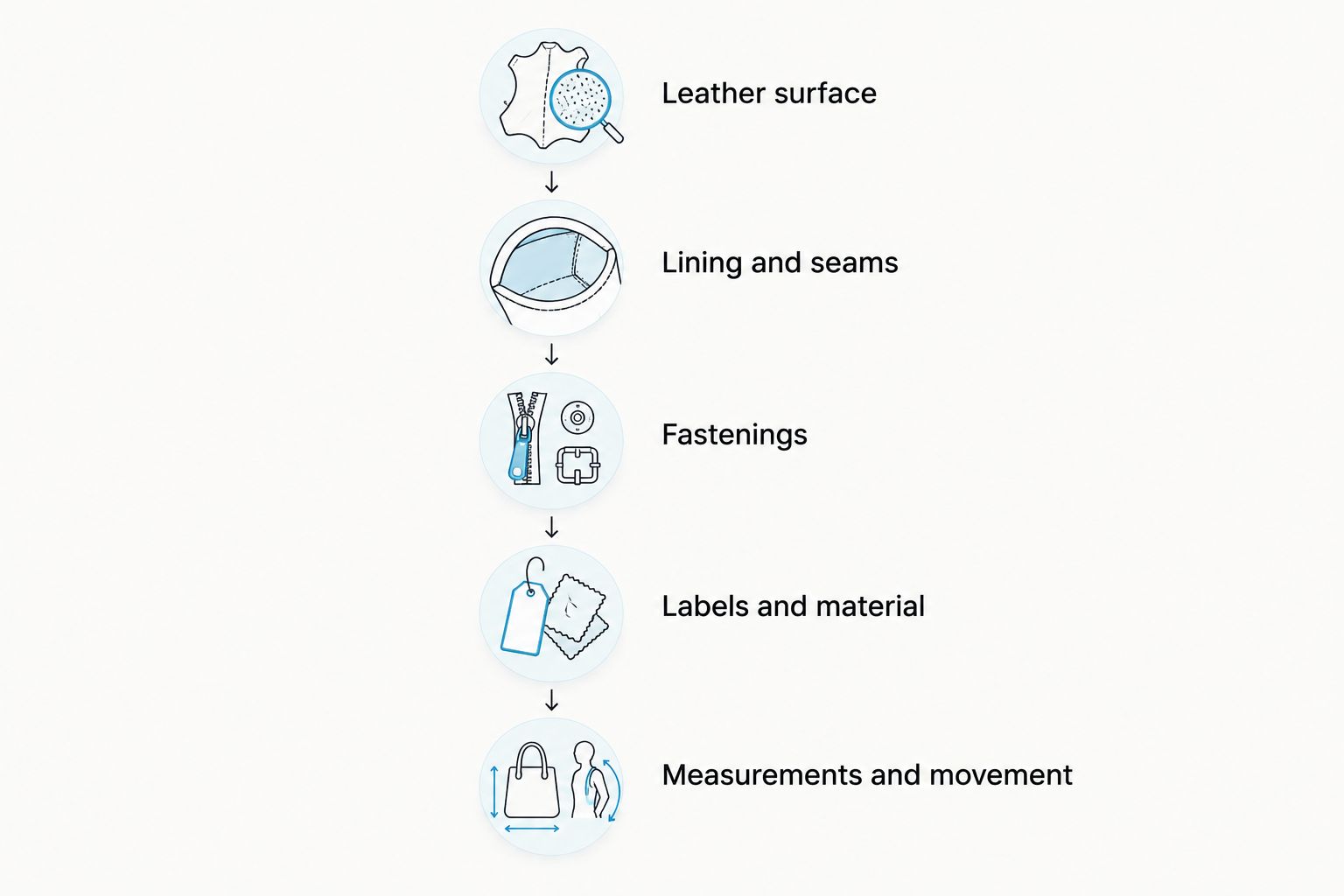
Work through the checks below in order. Start with the outside, then inspect the hidden areas, and finish with fit. Online, use photographs and direct questions; in person, handle the jacket gently and ask permission before testing anything.
1. Leather surface
Look at the front, back and sleeves in clear light. Then inspect the collar, elbows, cuffs and pocket edges, where repeated contact and movement leave visible wear.
Creases, rubbing and uneven colour are not the same as an open split. Look closely enough to tell whether a mark sits on the surface or whether the material has broken. A distant photograph does not answer that.
- Check the folds: ask for close-ups where a pale or dark line looks deeper than a crease.
- Check the edges: inspect cuffs, pocket openings and the bottom hem for tearing or separation.
- Check the finish: ask about visible lifting, flaking or sticky patches rather than assuming they are harmless.
- Check both sleeves: do not let a clean front distract you from damage on the elbows or undersides.
In person, feel whether the leather bends comfortably under gentle handling. Do not pull a questionable area apart or sharply fold it to test its strength. Online, ask the seller to describe stiffness, tackiness and any damage that photographs do not show.
2. Lining and seams
Ask for the jacket opened out, including the sleeve openings and underarm areas. Inspect the lining for holes, loose stitching, staining and repairs. A neat outside does not establish a neat inside.
Look at the joins around the shoulders, armholes and pockets. Identify whether loose threads are isolated or whether a seam is opening. If you see a repair, ask for a close-up of both the repair and the surrounding material.
A lining fault and a torn leather panel are different buying decisions. Describe the actual fault when asking a repair specialist for advice; do not rely on a vague description such as general wear.
3. Fastenings
Check the main zip, pocket zips, press studs, buttons and buckles that the jacket actually has. Ask whether they operate properly, not just whether they are present.
For a zip, inspect the teeth, slider and bottom connection. In person, close and open it without forcing it. Online, request a short demonstration if the listing leaves its operation unclear.
Look around each fastening too. A working stud attached to torn material still leaves a problem. Missing hardware or a replaced zip also matters if you want a particular model in its original configuration.
4. Labels and material
Read the brand, composition and care labels where they survive. Ask for sharp, straight-on photographs rather than trying to decode a blurred corner of a listing image.
Treat a seller's description and a readable label as separate pieces of evidence. If they conflict, ask for clarification. A jacket described as leather needs more than a convincing shine in a photograph.
For collectors buying in 2026, labels can help establish what is being offered. They do not, by themselves, establish an exact production date, rarity or authenticity. Avoid turning a familiar label shape into a claim the evidence does not support.
5. Measurements and movement
Compare the jacket with one that fits you well. Use measurements taken in the same way: chest width laid flat, shoulder width, sleeve length and back length. Ask the seller to specify centimetres or inches.
Check where each measurement starts and ends. A sleeve measured from the shoulder seam cannot be compared directly with one measured from the centre of the neck. Photographs showing the tape position remove that ambiguity.
Try the jacket closed with the layer you expect to wear underneath. Reach forwards and bend your elbows gently. Choose a fit that works now; do not buy a tight jacket on the assumption that it will stretch into the right size.
What wear is acceptable on a vintage leather jacket?
Acceptable wear is wear you understand and are happy to live with. It is not a blanket category that makes every fault fine because the jacket is old.
Use this table to decide what needs a closer look. These are inspection categories, not condition claims about any jacket pictured or linked on this page.
| What you see | What to establish | Buying decision |
|---|---|---|
| Creasing or rubbed colour | Whether the surface remains intact | Consider it if you like the appearance |
| A line that looks cracked | Whether it is a surface mark or an open split | Ask for a close-up before deciding |
| Flaking or lifting finish | Extent of the affected area and the stated material | Do not treat it as ordinary creasing |
| Torn lining | Location, extent and whether seams are involved | Assess the repair before buying |
| Broken or missing fastening | Which part has failed and how it attaches | Confirm the repair is practical |
| A visible alteration | What changed and how the jacket now measures | Buy for the current fit, not the original label |
Your threshold depends on your purpose. A jacket for regular wear needs working fastenings and comfortable movement. A collector also needs clear evidence for any model details that matter to the purchase.
For a 2026 purchase, write down your deal-breakers before browsing. That stops a good colour or familiar name from talking you into damage you would otherwise reject.
Why the buying decision varies
The right vintage leather jacket is not simply the cleanest example. These factors change whether a particular piece makes sense for you:
- Wear you enjoy: rubbing and colour variation can suit your taste, but they still need clear photographs.
- Structural condition: splits, failing seams and damaged fastening attachments affect how you can use the jacket.
- Fit: chest, shoulders, sleeves and length matter more than the size letter alone.
- Repair needs: establish what needs attention before committing to a project.
- Collector requirements: original details matter only when you can verify them and they matter to your purchase.
- Your intended use: choose for your actual layering and movement needs, not just a styled listing photograph.
Keep your own standard consistent. Do not excuse an unclear lining photograph on one jacket while rejecting another for the same missing view.
Which listed leather jackets should you inspect more closely?
Dawgstudio's vintage leather jacket listings provide starting points for comparing colour, collar design and stated size. The examples below have different listed details; none earns a condition verdict from its title alone.
Read the best-for labels as style preferences, not fit guarantees. The supplied descriptions do not establish exact measurements, complete condition or production dates.
| Listed jacket | Verified listing details | Best for | What still needs checking |
|---|---|---|---|
| H.l. vintage brown leather jacket XL | Brown; stated XL; structured stand collar; front zip | Shoppers seeking brown leather with a stand collar | Measurements, leather wear, lining and zip operation |
| Vintage Hutson Harbour brown leather jacket XL | Brown; stated XL; described as genuine leather; zip-up design with a spread collar | Shoppers seeking a brown spread-collar style | Composition evidence, measurements and full condition |
| Euro L vintage black leather jacket | Black; stated L; notched collar; snap-tab lapels; front flap chest pockets | Shoppers seeking black leather with lapel detailing | Measurements, fastening operation and inside condition |
The H.l. listing gives you a stand-collar option, but XL does not establish shoulder room. The Hutson Harbour description identifies genuine leather, but that does not establish the condition of every panel. The Euro L description gives useful collar and pocket detail, but those features do not settle fit.
Shortlist by design, then decide by evidence. Ask the same condition and measurement questions for all three rather than letting one stronger front photograph win the comparison.


What should you ask an online seller before buying?
Ask questions that produce usable answers. Instead of asking whether the jacket is in good condition, name the parts you want checked.
Use this list for your 2026 search:
- Are there any splits, flaking areas, sticky patches or stiff sections?
- Are the lining, pocket bags and underarm seams intact?
- Do all fitted zips, buttons and press studs work?
- Is there any smoke, musty or other noticeable smell?
- Has the jacket been repaired, altered or recoloured?
- Can you provide laid-flat measurements and photographs showing how they were taken?
Request daylight close-ups of anything unclear. Ask for front, back and inside views as well as the area causing concern. A photograph of the whole jacket gives context; a close-up helps you assess the fault.
Smell cannot be checked from an image. Get a direct answer and do not assume that airing or cleaning will solve an odour. Read the seller's stated returns terms before committing, particularly when you cannot try the jacket on.
Can you tell whether a leather jacket is genuine from photos?
Photos alone do not establish whether a leather jacket is genuine leather or whether a branded jacket is authentic. Use readable composition labels, detailed photographs and a description that agrees with them.
Surface texture is a clue to inspect, not a verdict. If the material or brand identity is central to your purchase, resolve conflicting information before buying.
Is a cracked vintage leather jacket worth buying?
A cracked vintage leather jacket needs a closer assessment before you decide. Establish whether the mark is confined to the finish or whether the material itself has split.
Do not assume conditioner will repair damage. If you would only wear the jacket after a repair, get advice on that specific fault first rather than buying on hope.
Should you trust the size label on a vintage leather jacket?
The size label on a vintage leather jacket is a starting point, not a fit guarantee. Compare actual measurements with a jacket you own and check that both were measured the same way.
Include the layer you intend to wear underneath. A jacket that closes over a tee does not automatically give you the movement you need over a sweatshirt.
FAQ
What's the first thing to check on a vintage leather jacket?
Check the leather surface for splits, flaking and damage around folds and edges. Then inspect the lining, seams and fastenings before deciding on fit.
How do I check a vintage leather jacket when buying online?
Use clear front, back, inside and close-up photographs, then request measurements and direct answers about faults. Ask about smell and fastening operation because still photographs cannot settle those checks.
Is worn leather the same as damaged leather?
Worn leather is not automatically damaged leather. Creasing and rubbed colour need a different assessment from open splits, separating material or broken seams.
Can I fix cracked leather with conditioner?
Do not treat conditioner as a repair for cracked leather. Establish what is damaged and seek advice on the specific material and fault before applying a product.
How can I check whether a vintage leather jacket fits?
Compare chest width, shoulders, sleeve length and back length with a jacket that fits you. Use the same measuring method and check movement with your intended layer underneath.
Does an old label prove a leather jacket is rare?
An old label does not prove rarity, authenticity or an exact production date. Require evidence for those claims rather than treating age or label appearance as proof.
What should I check on a Dawgstudio vintage leather jacket listing?
Check the individual Dawgstudio vintage leather jacket listing for its stated material, size, photographs and condition details. Resolve unclear measurements or faults before deciding; a product title is not a complete inspection.
One last thing
Ask for a photograph of the jacket fully closed. An open front can show the lining clearly while leaving you unable to judge how the fastening sits or whether the front hangs evenly.
For your final 2026 decision, keep the rule simple: buy the jacket you can assess, not the story you have filled in around it. Clear wear, usable measurements and working details beat an unsupported claim of rarity.