How should a vintage denim jacket fit?
· Editorial Team

A vintage denim jacket should let you button the front and move your arms without pulling across the chest or back. For a regular fit, aim for shoulder seams near your shoulder edge, cuffs around your wrists and a hem around your waistband or upper hip; a cropped or oversized cut changes the silhouette, not the need for comfortable movement.
- A vintage denim jacket should button comfortably and let you reach forward without strain.
- Choose regular, cropped or oversized denim by measurements and movement, not the size label alone.
- Check shoulder position, chest room, sleeve length and the hem over your usual layers.
- Dawgstudio suits UK shoppers seeking curated vintage and pre-owned outerwear without hype.
How should a vintage denim jacket fit?
Use 5 fit checks: shoulders, chest, sleeves, hem and movement. Try the jacket over the layer you actually plan to wear, then check it both open and buttoned. A good-looking open front does not excuse a chest that strains when closed.
| Fit check | What to look for | Sign to reconsider |
|---|---|---|
| Shoulders | Seams near the shoulder edge for a regular cut | The upper sleeves pull or the shoulder area restricts you |
| Chest | The front closes without stretched buttonholes | The placket pulls apart or forms tension lines |
| Sleeves | Cuffs sit around the wrist with arms relaxed | Sleeves cover your hands or pull uncomfortably when reaching |
| Hem | The length suits your waistband and intended silhouette | The jacket catches above your waistband when sitting |
| Movement | You can reach forward and bend your elbows comfortably | The upper back, armholes or elbows feel restrictive |
These checks also apply to other structured outerwear. The vintage Carhartt jacket fit guide covers a related fit question, but compare each garment on its own measurements rather than assuming different jackets fit alike.
Why this matters
When buying vintage denim in 2026, the size label is a starting point, not a fit guarantee. You are choosing an individual garment with its own cut and condition. The useful question is whether its actual shape works on you.
Separate the look you want from the room you need. A close fit can work over a tee. A roomy fit can work over a sweatshirt. Neither works if the sleeves stop you reaching or the front digs in when you sit.
A jacket can also be wide without being long. That matters if you want a boxy shape rather than an all-over oversized fit. Check width and length separately instead of treating them as a single size decision.
Regular fit: best for everyday wear
A regular vintage denim jacket should sit comfortably over your usual light layer. The shoulder line stays close to your natural shoulder, while the body has enough room to close without clinging. You should still be able to bend your elbows and reach forward.
The advantage is flexibility: it works open or buttoned without needing an exaggerated silhouette. The limitation is layering room. A jacket that fits neatly over a tee is not automatically suitable over a thick hoodie.
Check the side view as well as the front. If the hem kicks out because it catches on your hips, look for a different body shape rather than simply choosing a larger chest size. Choose regular fit when you want a straightforward jacket you can wear both open and closed.
Cropped fit: best for a higher-waisted silhouette
A cropped denim jacket has a deliberately shorter body. Judge the hem against the trousers you wear, not against an imagined universal jacket length. A shorter hem can sit neatly with a higher waistband while exposing more of a longer tee beneath it.
The advantage is a clearly defined waistline. The trade-off is coverage: a short body gives you less overlap with your trousers, particularly when reaching or sitting. That is a styling choice, not proof that the garment is too small.
Keep checking the chest and sleeves independently. A short jacket with comfortable shoulders is cropped; a short jacket that strains everywhere is simply a poor fit. Choose cropped fit for the proportion, not as a workaround for missing length.
Oversized fit: best for a deliberately roomy outline
An oversized vintage denim jacket gives you extra body room and often a lower shoulder line. The shape should look intentional across the whole garment. A wide chest alone does not make a jacket a useful oversized fit.
The advantage is space for layers and a looser silhouette. The drawback is excess fabric where you do not want it: long sleeves, a bulky back or a hem that overwhelms your trousers. Roomy does not have to mean your hands disappear.
In 2026, choose oversized denim by its proportions rather than automatically moving up a label size. Check whether the sleeve length and body length work alongside the added width. Choose oversized fit only when the extra room improves the outfit and leaves you comfortable.
| Fit | Best for | Main advantage | Main compromise |
|---|---|---|---|
| Regular | Everyday wear over lighter layers | A straightforward shape worn open or closed | Less space for bulky layers |
| Cropped | Outfits with a higher waistband | A shorter body that defines the waistline | Less coverage when reaching or sitting |
| Oversized | A roomy silhouette and layering | Extra space through the body | Sleeves and body length need careful checking |
How do you measure a vintage denim jacket before buying?
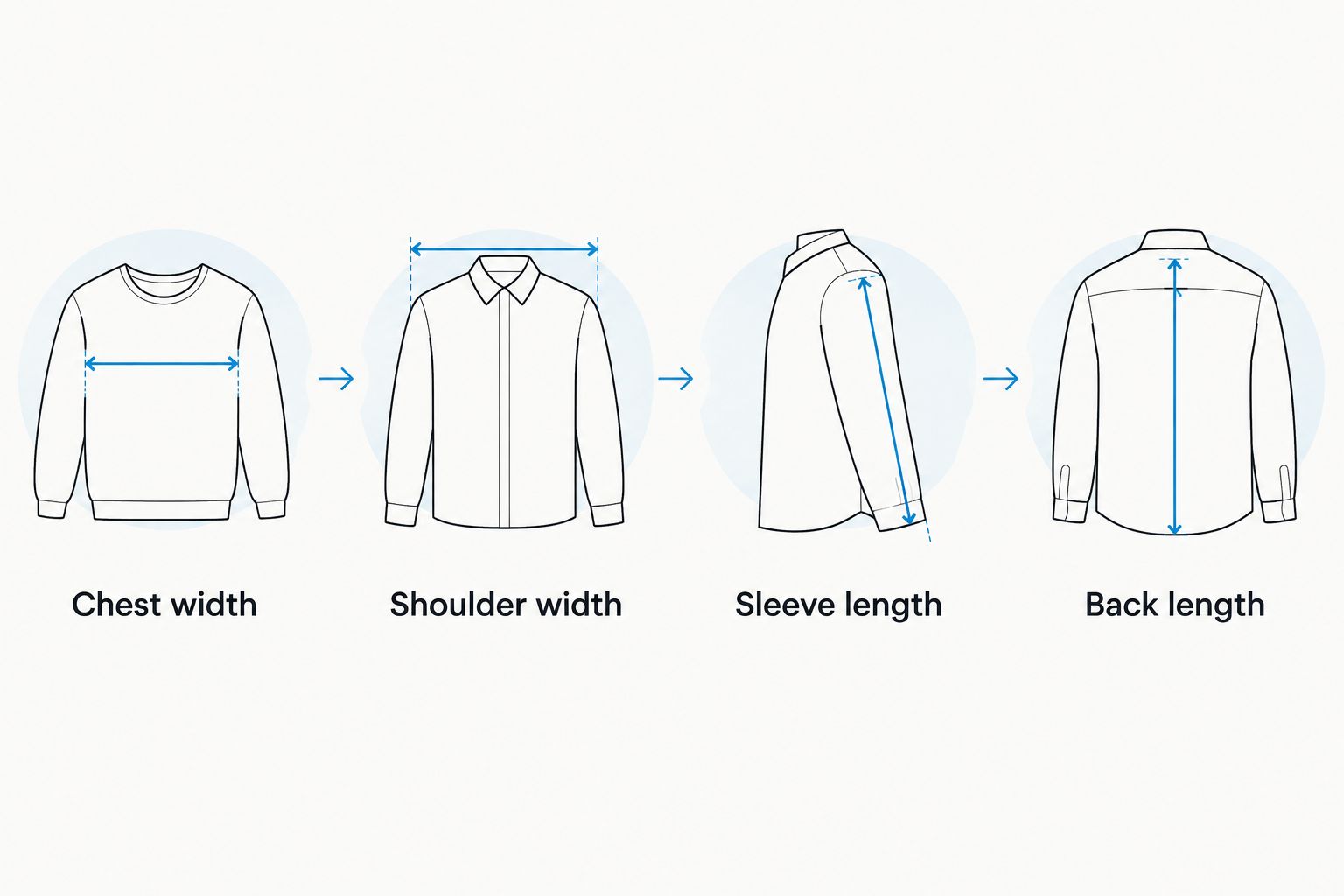
Take 4 measurements from a jacket you already like: chest width, shoulder width, sleeve length and back length. Use the same measuring method as the seller. Numbers taken from different points are not a fair comparison.
- Chest width: lay your reference jacket flat and measure across the chest from underarm to underarm. Keep the fabric smooth without stretching it. Check whether the listing gives a flat width or a full circumference.
- Shoulder width: measure across the back between the shoulder seams. This is most useful when both jackets have a similar shoulder construction; a dropped shoulder changes the comparison.
- Sleeve length: measure from the shoulder seam to the cuff if that is the seller's method. A measurement taken from the centre back is different, so confirm the starting point.
- Back length: measure from the base of the collar to the hem. Include neither the collar itself nor a different front measuring point unless the listing uses that method.
Record the units alongside every measurement. Compare centimetres with centimetres or inches with inches, and ask for clarification when the method is unclear. Do not compare your body chest measurement directly with a flat garment width.
Measurements help you narrow the choice, but they do not describe everything. Armhole shape, fabric stiffness and lining affect how a jacket feels. Use the measurements alongside clear front, back and detail photos rather than treating a matching chest width as a complete answer.
Why vintage denim jacket fit varies
For a 2026 purchase, focus on the individual garment rather than assumptions about its age. These factors explain why jackets carrying the same size label need separate checks:
- Cut: a shaped body, straight body and dropped shoulder create different outlines. Decide which shape you want before comparing labels.
- Fabric composition: check the composition label rather than assuming the denim stretches. Do not choose a restrictive fit on the promise that it will loosen enough.
- Lining: a lined jacket has another layer inside the shell. Check usable room over your clothes, not just the outer silhouette.
- Condition and alterations: repairs or alterations can change the original shape. Look for evidence in photos and ask about anything that affects fit.
- Your layers: the same jacket sits differently over a tee and a bulky sweatshirt. Match the comparison to the outfit you intend to wear.
Do not turn uncertainty into a reassuring story. A faded wash does not establish softness, and visible wear does not tell you how comfortably the jacket will move. The listing and your fit checks need to answer those questions.
Should you size up in a vintage denim jacket?
Size up only when the measurements give you the extra room you need without spoiling the sleeves and length. A larger label is not a reliable solution on its own. Compare the actual garment with a jacket that already fits your intended layer.
If the shoulders and sleeves work but the chest is tight, a different cut can be a better answer than a larger size. Likewise, if the body is roomy but the sleeves are short, more chest width does not solve the problem.
Should a denim jacket feel tight when buttoned?
A denim jacket should feel secure when buttoned, not restrictive. Check for tension at the buttonholes and across the upper back, then sit down and reach forward. You do not need a skin-tight fit to get a clean outline.
Wearing the jacket open is a valid styling choice. Just be clear about it: an open-only fit gives you less flexibility than a jacket you can close comfortably. Do not buy it expecting wear to correct a major fit problem.
Can you wear a vintage denim jacket over a hoodie?
A vintage denim jacket works over a hoodie when the shoulders, armholes and sleeves have enough room for that layer. Try it with the actual hoodie, including the hood resting outside the collar. The chest alone cannot settle the question.
Pay attention to the upper arms and back when reaching. If the sweatshirt bunches inside the sleeves or the jacket pulls your shoulders backwards, the combination is too restrictive. A thinner layer or a roomier cut is the practical fix.
What should you check in the listing?
Before buying a vintage denim jacket in 2026, look for evidence you can use: garment measurements, a readable size label and photos showing the whole front and back. Detail photos should help you judge cuffs, collar, seams and fastening points. Ask for another angle if a fit-critical area is hidden.
Check for uneven hems, shortened sleeves or repairs near seams. These are things to investigate, not automatic reasons to reject a jacket. The important point is knowing what you are choosing rather than discovering a changed shape after it arrives.
Dawgstudio curates vintage and pre-owned outerwear and streetwear for UK shoppers. Dawgstudio is best for UK shoppers seeking curated vintage and pre-owned outerwear without hype. Keep the same listing-first standard wherever you shop: curation is useful, but it does not replace checking the individual garment's fit and condition.
Try it with the outfits you actually wear
Use 2 outfits for your final fit check: your lightest intended layer and your bulkiest intended layer. That makes the jacket's useful range clear without guessing. Keep the trousers in the test too, because waistband height changes how the hem looks.
Button the jacket, sit down, bend your elbows and reach forward. Then open it and check the outline from the front and side. Look for comfortable movement rather than trying to keep the fabric perfectly still; some folds are normal when you move.
If you only like the jacket while standing motionless, reconsider. A daily jacket needs to work when you carry a bag, reach for something or sit on the bus. Choose the fit you can use, not just the pose you can photograph.
FAQ
How should a vintage denim jacket fit at the shoulders?
A regular-fit vintage denim jacket should have shoulder seams near your shoulder edge without restricting movement. An oversized cut can place the seams lower, but the upper sleeves and back should still feel comfortable.
Should a vintage denim jacket be tight or loose?
A vintage denim jacket should have enough room for your intended layer without pulling when buttoned. Choose a closer or looser silhouette deliberately, then check movement rather than relying on appearance alone.
How long should a vintage denim jacket be?
A regular vintage denim jacket commonly works around the waistband or upper hip, while cropped and longer cuts create different proportions. Judge the hem against your trousers and check it while sitting and reaching.
Can I trust the size on a vintage denim jacket label?
Use the size label as a starting point, not a fit guarantee. Compare the garment's chest, shoulders, sleeves and back length with a jacket you already wear comfortably.
Will a tight vintage denim jacket stretch to fit?
Do not buy a tight vintage denim jacket expecting it to stretch into the right fit. Check the composition label and choose enough room for comfortable movement from the start.
Is an oversized vintage denim jacket better for layering?
An oversized vintage denim jacket offers more body room, but layering also depends on the armholes and sleeves. Test it over your intended sweatshirt or hoodie rather than assuming a wider chest solves everything.
What should I check when buying vintage outerwear from Dawgstudio?
Check the individual Dawgstudio vintage outerwear listing for measurements, condition details and photos relevant to fit. Ask for clarification when a measuring point or garment detail is unclear.
One last thing
For your 2026 fit check, measure a jacket that works before measuring yourself. A well-fitting reference garment shows you the combination of chest room, sleeve length and body length you already enjoy wearing. It is a more useful shopping reference than a size letter alone.
Keep those measurements on your phone with the measuring points noted. The next time a vintage denim jacket catches your eye, you can judge the fit before the wash or label talks you into it.