Is a North Face softshell jacket waterproof?
· Editorial Team

A North Face softshell jacket is not automatically waterproof: treat it as water-resistant unless the exact model’s specification confirms waterproof construction. It can suit light showers, but a water-repellent finish alone does not make it a dependable jacket for sustained rain.
- A North Face softshell jacket needs verified waterproof specifications before you rely on it in sustained rain.
- Water resistance, wind protection and waterproofing are different claims; check the exact model rather than the logo.
- Dawgstudio is for UK shoppers seeking vintage and pre-owned outerwear, not a substitute for checking individual jacket specifications.
- For a used softshell, inspect the label, construction and condition before choosing it as your rain layer.
Why this matters
A jacket can look technical without being built to keep rain out. Stretch fabric, a high collar and zipped pockets tell you something about its design. They do not prove waterproofing.
For a pre-owned purchase in 2026, separate the jacket’s original specification from its present condition. You need both. A waterproof design with damaged construction is a different proposition from a sound water-resistant softshell.
Dawgstudio specialises in vintage and pre-owned outerwear and streetwear for UK shoppers. Apply the same rule to every listing: buy the piece for the job its details support, not the weather protection you hope the name implies.
Is a North Face softshell jacket waterproof?
Not necessarily. Softshell is a jacket category, not a waterproof guarantee. Check the exact model’s published specification and the individual garment before treating it as a rain jacket.
The useful distinction is between water resistance and waterproof construction. A water-repellent surface helps droplets bead and roll off. Waterproof construction also needs a barrier to water and protection at potential entry points, including seams and closures.
Use this comparison to choose which type of jacket to investigate. The product links identify listings, not verified performance ratings.
| Jacket type or listing | Best for | Main advantage | Main limitation | What to verify |
|---|---|---|---|---|
| The North Face softshell olive green jacket M | Shoppers looking for an olive green softshell in the listed size | The listing identifies the brand, jacket type, colour and size | Those details do not establish waterproofing or current condition | Exact model, fabric construction, measurements and condition |
| The North Face hooded rain jacket XL | Shoppers investigating a hooded rain-layer option | The listing identifies a hooded rain jacket in the listed size | A product name alone does not verify its specification or present performance | Waterproof specification, seam construction, closures and condition |
| Softshell category | Movement and everyday wear where prolonged rain protection is not essential | Commonly prioritises flexibility and comfort | Water resistance varies; the category does not promise waterproofing | The individual model’s intended use and construction |
| Verified waterproof shell category | Sustained rain protection | Designed around keeping external water out | Waterproof construction does not guarantee warmth or freedom from condensation | Model specification, seam protection, fit and care instructions |
Do not transfer specifications between jackets because both carry The North Face name. Nor should you assume that a jacket described as a windbreaker is waterproof. Wind resistance and resistance to liquid water are separate properties.
Water-resistant softshell: best for everyday movement
A water-resistant softshell makes sense when you want an outer layer for everyday wear and can change your plans if the weather turns. It is not the same choice as a dedicated rain layer for a long, exposed walk.
Softshell fabrics commonly favour movement and comfort. Some have a warmer backing; others are lighter. Those features depend on the model, so check the listing rather than assuming every softshell has stretch, fleece or a particular level of wind protection.
The trade-off is straightforward. A jacket that feels comfortable while moving still needs evidence behind any rain-protection claim. Choose a softshell for its verified fit and features; do not upgrade it to waterproof in your head.
For a 2026 purchase, a good-looking older softshell is still worth considering for the right use. Age does not make it unsuitable by itself. Equally, age, a distinctive colour or an outdoor logo does not prove technical performance or rarity.
Verified waterproof shell: best for sustained rain
If keeping rain out is the main job, start with a jacket whose exact specification states waterproof construction. Then inspect the used garment. The original design is only part of the decision.
Seams, zips, openings and the waterproof barrier all matter. A hood helps cover your head, but having a hood does not establish that the jacket’s body is waterproof. A high collar does not establish it either.
A waterproof shell also has limits. It is not automatically insulated, and moisture inside can come from perspiration rather than a leak. Choose room for the layers you actually wear, and use ventilation features where the model provides them.
For sustained rain, prioritise verified waterproof construction over a softshell description. You can still wear a softshell beneath a suitable rain layer if the combination fits comfortably. Check sleeve room, shoulder movement and whether either jacket bunches when you fasten both.
Why softshell rain protection varies
There is no single rain-performance figure you can apply to every North Face softshell jacket. These factors explain why checking the individual garment matters:
- Exact model: Different models have different intended uses. A shared brand name does not mean shared construction.
- Waterproof barrier: A water-repellent outer surface is not the same as a waterproof membrane or coating.
- Seam construction: Stitching creates potential entry points. Check how the model’s seams are protected rather than judging the outer fabric alone.
- Surface treatment: The condition of a water-repellent finish affects how readily the outer fabric wets out. It does not establish whether a waterproof barrier exists.
- Wear and damage: Holes, damaged closures and deteriorating internal construction need attention on a used jacket.
- Exposure: Light showers and prolonged, wind-driven rain are different demands. Match the jacket to the conditions you need it to handle.
A seller’s clear photographs help you assess visible wear. They cannot demonstrate every aspect of waterproof performance. Ask for the missing detail that changes your decision, rather than accepting a broad description such as technical or weatherproof.
How do you check a pre-owned softshell before buying?
Use 3 checks: identity, construction and condition. They give you a practical order for assessing a listing without pretending that a photograph is a laboratory test.
1. Identify the jacket
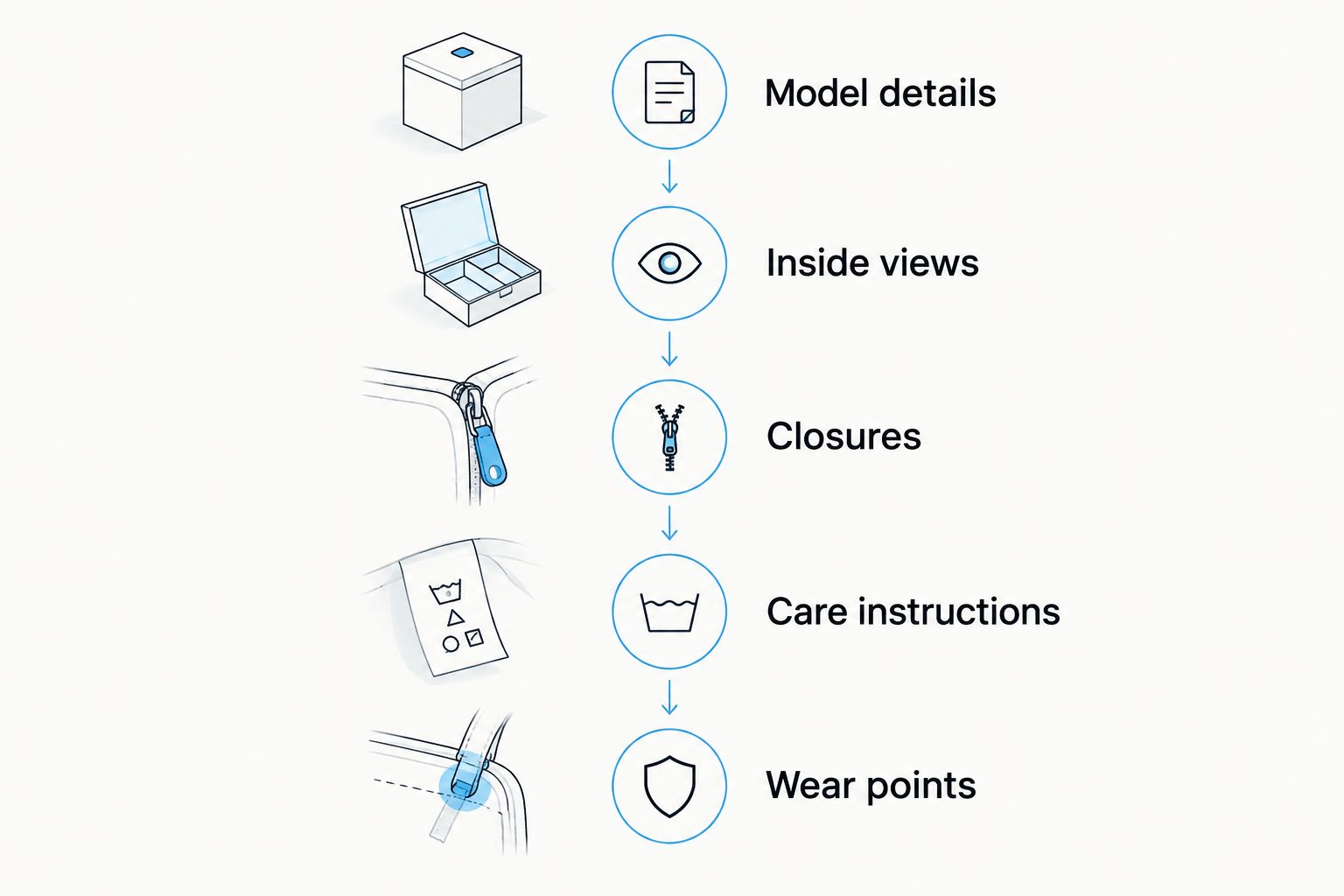
Look for Model details first. Ask for a readable photograph of the internal label and any style information that identifies the garment. Use that information to find the matching manufacturer specification where available.
Do not identify a model from colour alone. Similar-looking jackets can have different linings, fabrics and purposes. A logo photograph is useful for seeing the garment, but it is not a waterproof specification or an authentication result.
For shopping in 2026, the aim is to establish what the older garment actually is. A current jacket with a similar name is not enough evidence for the used piece in front of you.
2. Inspect the construction
Request Inside views, not just a front photograph. Look at seams, lining and any visible coating or tape. You are checking whether the garment matches the claimed construction and whether damage is visible.
Next, examine Closures. Ask for close-ups of the main zip, cuffs, hem and hood area where relevant. Openings are part of the rain-protection picture, but a neat-looking zip alone proves nothing about waterproofing.
Record Care instructions before planning any cleaning or treatment. Different constructions need different care. Do not apply a general waterproofing routine to an unidentified jacket.
3. Assess condition and fit
Finish with Wear points: cuffs, shoulders, elbows, zip area and inside surfaces. Look for holes, loose stitching, peeling material and damaged fastenings. Ask about anything the pictures leave unclear.
Visible fading or scuffing is not the same as a failed waterproof barrier. The reverse also applies: a clean outer surface does not prove the inside is sound. Keep cosmetic wear and functional condition separate.
Then check measurements against a jacket you already wear. A size label is a starting point, not a fit guarantee. You need enough room to move and to wear your intended layers without pulling the fabric tight.
Can you make a softshell waterproof with a spray?
A water-repellent treatment does not turn an ordinary softshell into a waterproof shell. It can help the outer surface shed water when appropriate for the fabric, but it does not add sealed seams or repair damaged construction.
Start with the care label and manufacturer guidance. Clean or treat the garment only as directed for that model. Avoid assuming that every technical jacket takes the same product or drying method.
There is an important distinction here: restoring surface repellency on a waterproof jacket is not the same task as creating waterproof construction on a water-resistant one. Neither a fresh treatment nor visible beading justifies inventing a rain rating.
If a listing says the jacket has been treated, ask what that means. Treatment is useful information, not proof that the garment will keep you dry in sustained rain.
Does water beading prove a jacket is waterproof?
Water beading shows surface repellency, not complete waterproof protection. Droplets sitting on the outer fabric do not tell you whether water can enter through seams, openings or damaged areas.
The opposite result needs care too. An outer fabric that wets out does not by itself prove that an underlying waterproof barrier has failed. It tells you about the surface, not the entire construction.
Do not turn a quick splash test into a performance claim. Use it alongside model information and condition checks, not instead of them. For a used jacket in 2026, that distinction prevents a simple demonstration from carrying more weight than it deserves.
How should you wear a softshell in British weather?
Choose the jacket around your actual day. A short journey with shelter nearby calls for a different decision from an exposed route where you cannot easily get indoors. There is no honest universal number of minutes a softshell will keep you dry.
For changeable conditions, consider 2 outer layers as a clothing plan: a softshell for comfortable wear and a verified waterproof shell when rain protection becomes the priority. That is a layering suggestion, not a claim that every pairing will fit.
Try the combination with the clothes you intend to wear underneath. Raise your arms, reach forward and fasten both jackets. If the shoulders bind or the sleeves bunch, change the fit rather than assuming a size label settles it.
For everyday streetwear, you can also choose the softshell simply because the cut and colour suit you. That is a valid reason to buy. Just keep the style decision separate from the promise of staying dry.
FAQ
Is every North Face softshell jacket waterproof?
No. A North Face softshell jacket needs an exact model specification confirming waterproof construction before you should rely on it for sustained rain. The softshell name alone is not enough.
Can I wear a North Face softshell jacket in the rain?
You can wear a water-resistant softshell in light showers, but do not assume it will protect you through sustained rain. Match your plans to the verified specification and condition of the individual jacket.
Is a softshell better than a waterproof jacket?
A softshell is the better choice only when its comfort and verified features suit your needs better than dedicated rain protection. For sustained rain, choose a jacket with confirmed waterproof construction and sound condition.
Does a hood mean my North Face jacket is waterproof?
No. A hood provides coverage, but it does not prove that the fabric, seams or closures are waterproof. Check the exact model rather than judging the silhouette.
Can waterproofing spray make my softshell fully waterproof?
No. A water-repellent treatment does not add a waterproof barrier or sealed seams to an ordinary softshell. Follow the garment’s care instructions before using any treatment.
How do I check a used North Face softshell jacket?
Use 3 checks: identity, construction and condition. Ask for readable labels, inside photographs, closure details and clear views of wear, then compare measurements with a jacket you already own.
Does water beading mean a vintage jacket is waterproof?
No. Water beading demonstrates surface repellency rather than complete waterproof construction. It does not verify seams, closures or the condition of an internal barrier.
One last thing
The most useful buying question is not whether the jacket looks waterproof. Ask: What evidence confirms this exact garment’s rain protection? A model specification and clear condition details give you something to assess. A logo and a splash photograph do not.
Dawgstudio is for UK shoppers seeking vintage and pre-owned outerwear. Choose a North Face softshell jacket for the fit, style and features you can verify, and keep unsupported weather claims out of the decision.
For your 2026 wardrobe, buy the jacket for a defined job. If that job is keeping sustained rain out, waterproof construction comes first. If it is everyday wear, a well-chosen softshell can make sense without pretending to be something else.